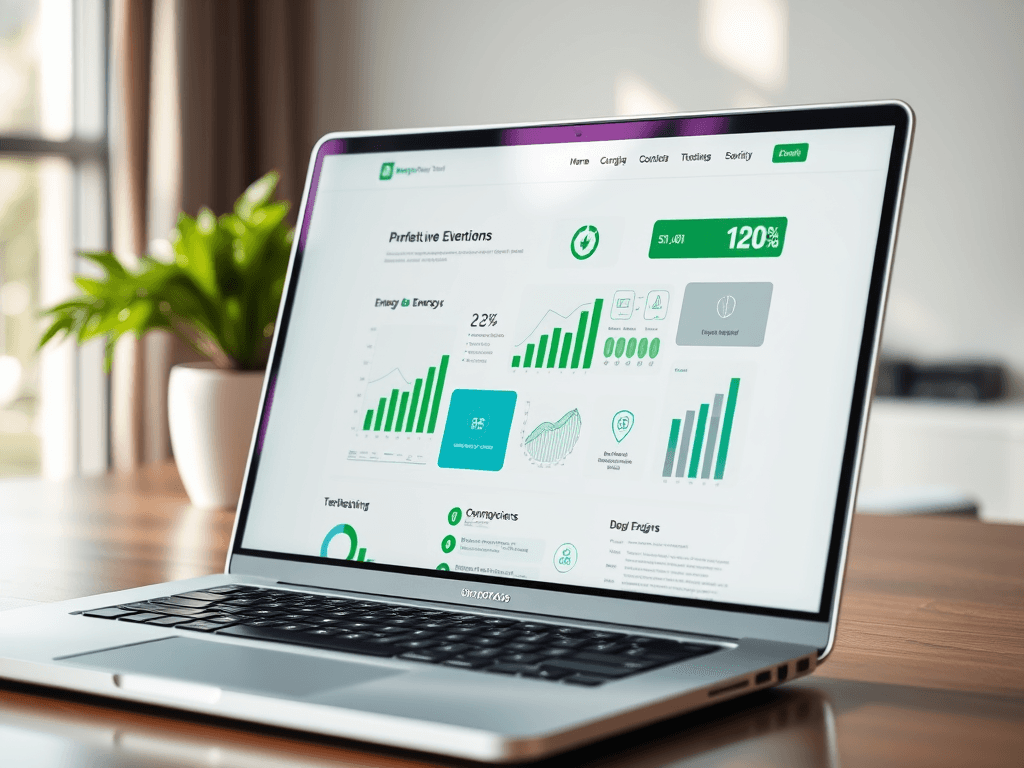
Designing the Perfect Website for Energy Engineers
For energy engineers, a professional and effective website serves as both a digital business card and a portfolio of innovation. From showcasing projects to connecting with potential clients, the design should reflect the reliability and technology that drive the energy sector. A well-planned site not only strengthens credibility but also improves user engagement through thoughtful content structure and technical precision.
Crafting a User-Focused Website for Energy Engineers
Energy engineers operate in a highly technical and data-driven field, so a website designed for them must balance technical depth with accessibility. Visitors—whether clients, partners, or other engineers—should be able to navigate complex information easily. This begins with understanding user scanning patterns. Eye-tracking studies show that users often scan in an “F-shaped” pattern, focusing heavily on the top-left area. Use this space wisely by placing key messages, contact information, or vital navigation tabs there. Complement it with visual hierarchy techniques—such as varying font size, contrast, and white space—to guide the eye naturally across the page.
Adding interactive design components such as calculators (for energy savings or carbon footprint estimation) or dynamic project portfolios can make your site an engaging resource hub. Use consistent color themes that reflect sustainability and reliability—greens, blues, and neutral tones perform well in this context. Avoid clutter and ensure the design breathes; “white space” allows content to stand out and helps visitors stay focused on what matters most.
When it comes to structure, prioritize clarity and flow. Begin with clear headlines that immediately communicate purpose—like “Renewable Energy Projects” or “Engineering Solutions.” Providing an About page with credentials, certifications, and affiliations adds trustworthiness. Archer IT Solutions (www.archer-its.com/web-design-services) can assist energy engineers in implementing such design frameworks backed by professional hosting and technical reliability.
Summary: Focusing on user scanning behaviors, visual hierarchy, and purposeful content placement makes your website intuitive and authoritative, perfect for representing an energy-focused brand.
Turning Website Design Insights into Action
Once the website concept is established, execution becomes the next challenge. Developing your site on a reliable hosting platform ensures fast load times and uptime stability. Archer IT Solutions’ Web Hosting Services cater precisely to professional websites needing secure and scalable hosting. Pairing this with managed IT support allows ongoing monitoring and maintenance—ideal for businesses dealing with technical data and analytics. For assistance, support queries can be submitted at https://archer-its.com/ticket.
Pros and Cons of Complex Features
Pros:
- Enhanced functionality like project tracking or data visualizations improves engagement.
- Advanced plugins can streamline data sharing and reporting for engineers.
Cons: - Too many plugins can slow performance or introduce compatibility issues.
- Complex features may overwhelm non-technical visitors.
Troubleshooting Plugin Compatibility
Energy engineering websites often integrate plugins for analytics, renewable energy calculators, or CAD visualizers. Common problems include slow page loads or conflicting code. To avoid this, test new plugins in a staging environment before installing them on your live site. Ensure your content management system and plugin versions remain updated, and keep a backup before any major change. For ongoing support, contact support@archer-its.com.
Lastly, remember that technical excellence alone isn’t enough; emotional appeal also plays a role. Add real-world case studies and sustainability success stories to humanize your engineering achievements. For in-depth design principles, you can explore Smashing Magazine’s guide to UX design or the Interaction Design Foundation.
Summary: Applying design research, managing plugin use smartly, and balancing technical with human elements ensures your energy engineering website is both strong and approachable.
Building a website that resonates with energy engineers involves blending technical accuracy with design empathy. By aligning usability, aesthetic clarity, and technical stability, your online presence becomes a powerful tool to share expertise and attract opportunities. Reflect on your own business goals—whether you need a clean portfolio, a detailed data hub, or a client-focused service page—and consider professional partners like Archer IT Solutions to bring that vision to life. For personalized support, reach out via support@archer-its.com or explore their managed IT and web design solutions at www.archer-its.com.
Images (Suggested):
- A clean, modern energy engineering website layout mockup.
- Image showing visual scanning heatmap (F-shape pattern).
- Engineer reviewing energy analytics dashboard on the website.
- Team collaborating on UX wireframes for technical websites.
Starter Website
Use our AI bots to build a starter website for you.
$50 setup with hosting at $9.99 per month
Discover more from Archer IT Solutons
Subscribe to get the latest posts sent to your email.
Discover more from Archer IT Solutons
Subscribe to get the latest posts sent to your email.
Discover more from Archer IT Solutons
Subscribe to get the latest posts sent to your email.

No responses yet