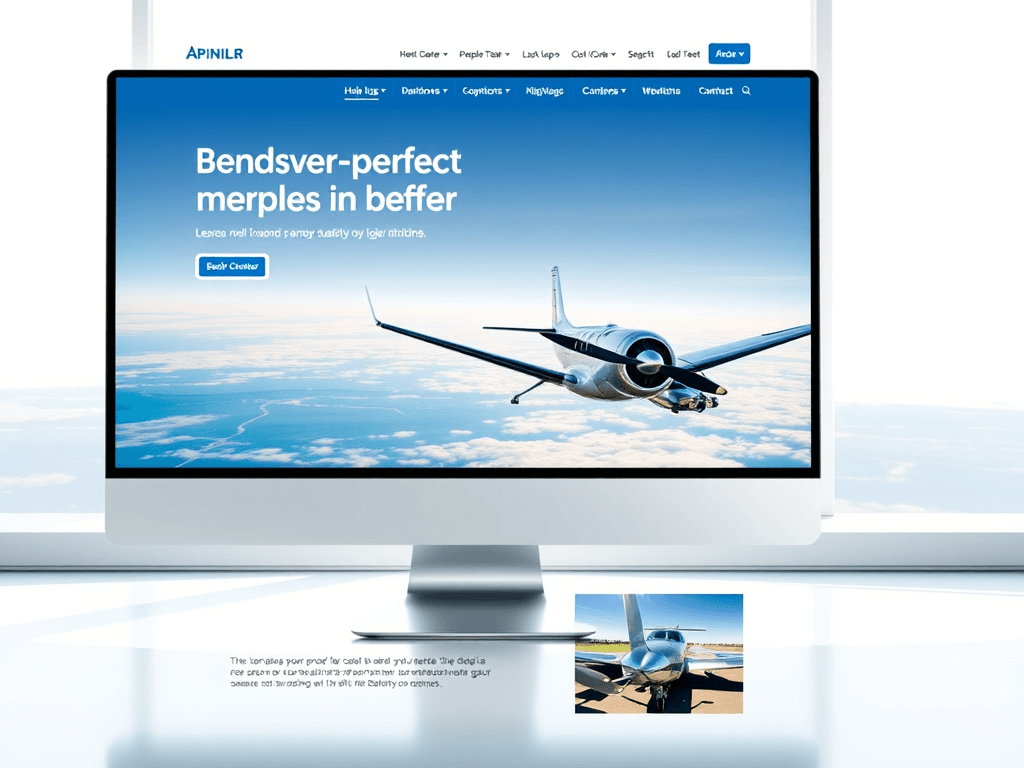
Finding the Perfect Website Style for Your Pilot Business
Creating the perfect online presence for your pilot business is more than just putting together a sleek design. It’s about understanding how visitors behave, where their eyes naturally go first, and what compels them to trust you with their business. A well-designed aviation website helps communicate safety, professionalism, and precision—all key values clients look for when hiring pilot or charter services.
Below we’ll explore how to define an ideal design style for aviation services, the elements that set professional pilot websites apart, and even how to troubleshoot common website plugin issues to ensure your site runs smoothly.

Defining the Ideal Website Look for Aviation Services
The ideal pilot business website must visually communicate expertise and safety. Clean lines, subtle animations, and professional imagery of aircraft or flight operations help establish trust. The color palette often includes blues, silvers, and whites—tones associated with skies, reliability, and calmness. Studies show that users form an opinion about your site in just 0.05 seconds, according to Behavior & Information Technology Journal, reinforcing the need for a strong first impression.
When designing for flight-related services, visual hierarchy becomes essential. The most important details—such as contact information, booking links, and certifications—should appear in visual hotspots like the top-left corner or center of the homepage. This aligns with the natural scanning pattern of users. Use white space to enhance focus, guide attention naturally, and maintain an uncluttered look.
Key Takeaways:
- Use a professional, trustworthy color scheme (e.g. navy, gray, white).
- Keep headlines bold and concise to draw attention.
- Use high-quality aircraft photography to convey professionalism.
Summary: The right design style builds trust immediately, leading users to perceive your pilot business as credible and capable—even before they read a single word.

Key Design Features That Elevate Pilot Business Sites
Design features like clear navigation, visible CTAs (Call to Actions), and responsive design are not optional—they’re crucial. For example, having a “Book a Charter” button above the fold can increase conversions by up to 32%, based on research from HubSpot’s 2023 Web Behavior Report. Responsive layouts ensure your website looks great on tablets and smartphones, crucial for pilots who often browse on the go.
Incorporating strong content structure helps guide the visitor’s journey. For example, use concise headings like “Our Fleet,” “Safety Standards,” and “Pilot Training.” Each section can be visually divided by subtle color changes or background imagery. Mindful typography ensures readability even when users scan quickly. Modern sans-serif fonts like Montserrat or Open Sans work well in airplane and aviation contexts.
Pros and Cons:
- Pros: Builds authority, converts visitors, scalable with business growth.
- Cons: May require technical maintenance, plugin updates, and security monitoring.
Quick Troubleshooting Tip:
If your plugins cause compatibility issues (common with site builders like WordPress or Elementor), clear your cache, deactivate recent updates, and test each plugin individually. For complex or recurring problems, contact professional support such as Archer IT Solutions’ Ticket Portal for diagnostic help.
Summary: Combining strategic design features and technical reliability creates a seamless browsing experience—from initial curiosity to final conversion.

A well-designed website can elevate your pilot business from a local service to a trusted aviation brand. By applying principles of visual hierarchy, focusing on readability, and maintaining technical stability, you create a digital runway for long-term growth.
Now is the perfect time to review your own online presence. Does your current site reflect your level of expertise and reliability? If not, consider reaching out to Archer IT Solutions for modern web design or managed IT support that ensures your aviation site is both beautiful and problem-free.
For additional insights on aviation website best practices, check out resources from AOPA.org or FAA.gov. Your next step toward a professional digital presence is just a few clicks away—start building your sky-worthy website today.
[submit “Submit”]
1
[_site_title] “[your-subject]”
[_site_title]
[_site_admin_email]
From: [your-name] [your-email]
Subject: [your-subject]
Message Body:
[your-message]
—
This is a notification that a contact form was submitted on your website ([_site_title] [_site_url]).
Reply-To: [your-email]
1
1
[_site_title] “[your-subject]”
[_site_title]
[your-email]
Message Body:
[your-message]
—
This email is a receipt for your contact form submission on our website ([_site_title] [_site_url]) in which your email address was used. If that was not you, please ignore this message.
Reply-To: [_site_admin_email]
1
1
Thank you for your message. It has been sent.
There was an error trying to send your message. Please try again later.
One or more fields have an error. Please check and try again.
There was an error trying to send your message. Please try again later.
You must accept the terms and conditions before sending your message.
Please fill out this field.
This field has a too long input.
This field has a too short input.
There was an unknown error uploading the file.
You are not allowed to upload files of this type.
The uploaded file is too large.
There was an error uploading the file.
Please enter an email address.
Please enter a URL.
Please enter a telephone number.
Please enter a date in YYYY-MM-DD format.
This field has a too early date.
This field has a too late date.
Please enter a number.
This field has a too small number.
This field has a too large number.
The answer to the quiz is incorrect.

No responses yet